
Water scarcity threatens communities across the globe as climate change disrupts weather patterns and population growth strains our limited freshwater supplies. While water covers more than 70% of the planet, less than 1% is readily available for human use. And in just 25 years, droughts are projected to affect three in four people worldwide. As these dry conditions spread and groundwater reservoirs deplete, we must look to the seas as another resource.
Desalination filters salt and minerals to generate fresh, potable water, providing a crucial solution for regions where seawater is the only water source available. Over the next five years, the global desalination market is expected to grow to $97 billion, driven primarily by the Middle East, Pacific Asia and some countries in Europe.
Desalination has become more sustainable, affordable and effective thanks to technological innovations over the last 25 years. They have transformed the process from an expensive last resort into a competitive, viable option for regions facing water insecurity.
With decades of experience, Veolia has planned, built and supplied equipment for 18% of desalination facilities worldwide, producing freshwater for both municipal and industrial applications. The company has become a leader in the desalination market with more than 2,300 sites in 44 countries across the world and plans to double its operated capacity by 2030 to keep pace with future growth.
Bringing the largest desalination plant to Africa
While the Middle East will still account for nearly 40% of Veolia’s future capacity for desalination projects, the company is planning hundreds of projects in other regions over the next five years.
One area experiencing an especially urgent need is North Africa, where higher temperatures and lower-than-average rainfall are contributing to a severe drought. Morocco specifically faces unprecedented water stress, with reservoirs at historically low levels.
To address this growing challenge, Veolia and the Kingdom of Morocco have signed an agreement to jointly develop the Rabat desalination plant, which will be the largest in Africa and the second largest in the world. The plant, powered by decarbonized energy, will supply drinking water to nearly 9.3 million people, helping regions particularly affected by Morocco’s worst drought in 40 years.
The landmark project also shows how Veolia deploys advanced technology at scale to address urgent water needs. The success of these implementations depends on balancing immediate needs with long-term environmental considerations, an area where Veolia has developed particular expertise.
Sustainable solutions
Every step of Veolia’s process is optimized for sustainability — from increasing the energy efficiency of reverse osmosis to optimizing water quality during remineralization.
Recent innovations improve energy efficiency, making the entire process more cost-efficient. The Spidflow® dissolved air flotation (DAF) filter and M&C filter protect membranes and allow for a smaller footprint of seawater reverse osmosis plants. Veolia’s Smart Membrane technology even leverages artificial intelligence to normalize and predict the evolution of operational parameters.
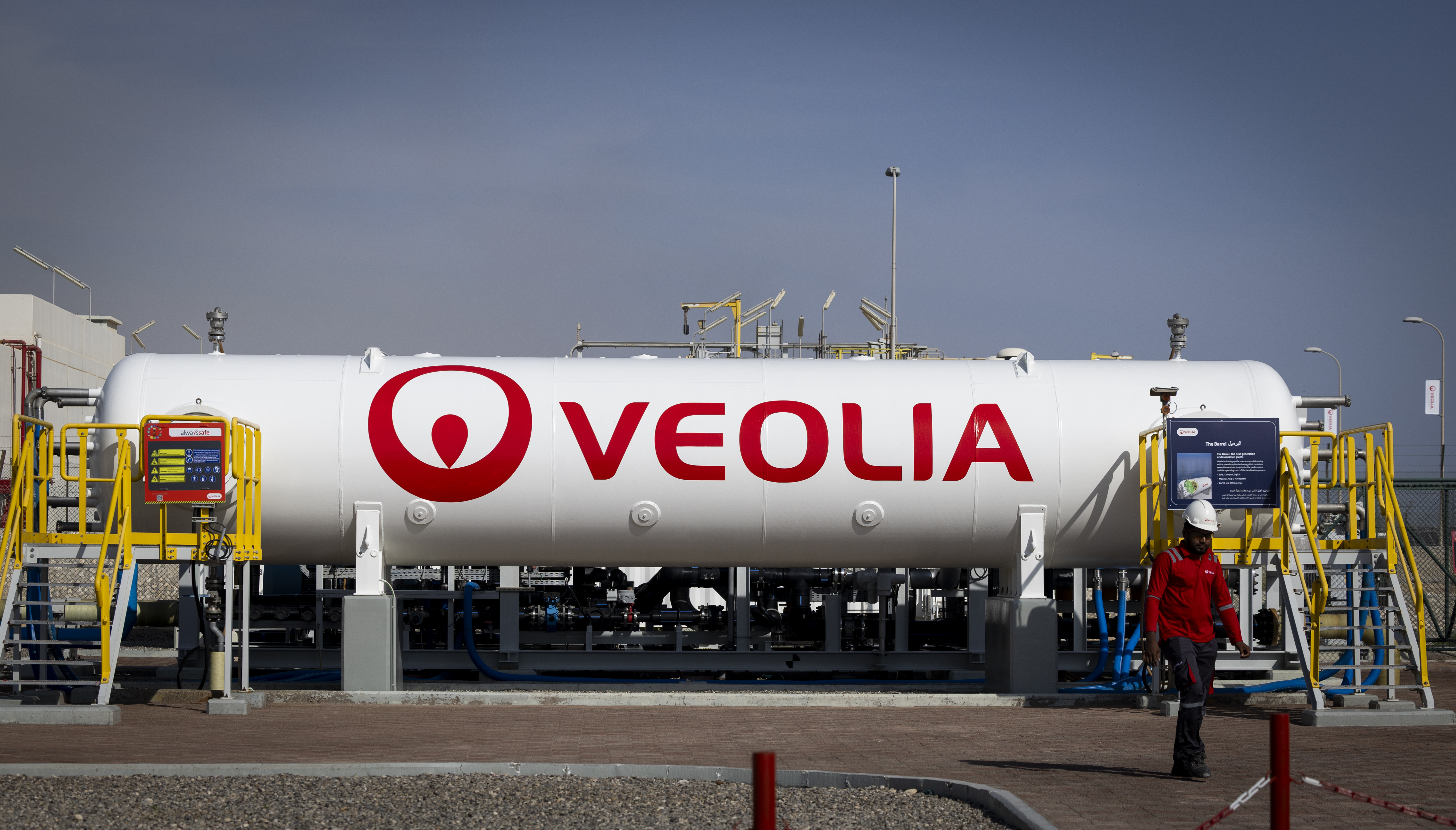
Veolia’s latest reverse osmosis technology is the Barrel™, a desalination system delivered on-site as a ready-to-operate module. This safe, compact, digital solution produces water compliant with all purity standards and meets the challenges of the desalination market. It is also suitable for water reuse, allowing for significant capital and operating expenditure savings.
Sustainable Desalination from Oman to Trinidad
The Sur Desalination plant in Oman exemplifies Veolia’s commitment to sustainability. Featuring the largest solar power plant on a desalination facility in the Middle East, the plant generates over 30 gigawatt-hours of green electricity annually. This supplies more than a third of the plant's daily energy needs and reduces CO2 emissions, marking a significant step toward clean energy transition and plant decarbonization. Creating this kind of ecological transformation aligns with Veolia’s GreenUp strategy to depollute, decarbonize and regenerate our resources.
Veolia has been leading the growth of desalination worldwide for decades. In Trinidad, water scarcity constricted the expansion of the Point Lisas industrial area. That challenge led to the creation of the Trinidad desalination plant, which was commissioned in 2002. The treatment system is intensive because of the high amount of silt in the gulf water, leveraging a pretreatment system followed by seawater reverse osmosis and then brackish water reverse osmosis. The plant produces nearly 30 million imperial gallons of potable water per day to clients of the industrial park and customers of the Water and Sewer Authority of Trinidad and Tobago.
Veolia recently won a contract to engineer and supply key technology for the Hassyan seawater desalination plant in Dubai. This will be the world's most energy-efficient desalination plant, strengthening water security in the United Arab Emirates. The project is unique in its exceptional energy efficiency; Veolia's expertise has reduced energy consumption to 2.9 kilowatt-hours per cubic meter (kWh/m³). Furthermore, it will be the world's largest solar-powered desalination plant. With a capacity of 818,000 m³ per day, this reverse osmosis desalination plant will provide drinking water to 2 million people.
Unlocking the vast potential of the seas
As technology advances, we can expect further reductions in environmental impacts and overall costs. Desalination is also becoming increasingly scalable to meet growing global demand as it multiplies over the next few years.
No single solution can resolve the planet's water scarcity challenges, but seawater desalination holds unique promise by extracting life-sustaining resources from our oceans. Reuse solutions, as well as limiting leaks and reducing overall consumption, are first steps and should be prioritized, but desalination is one part of the mix of solutions needed to address scarcity challenges. Reach out to a Veolia expert to learn more about whether desalination is a viable solution for your water challenge.
Tags
Author | Adrien DE SAINT GERMAIN
CEO, Veolia's desalination activities