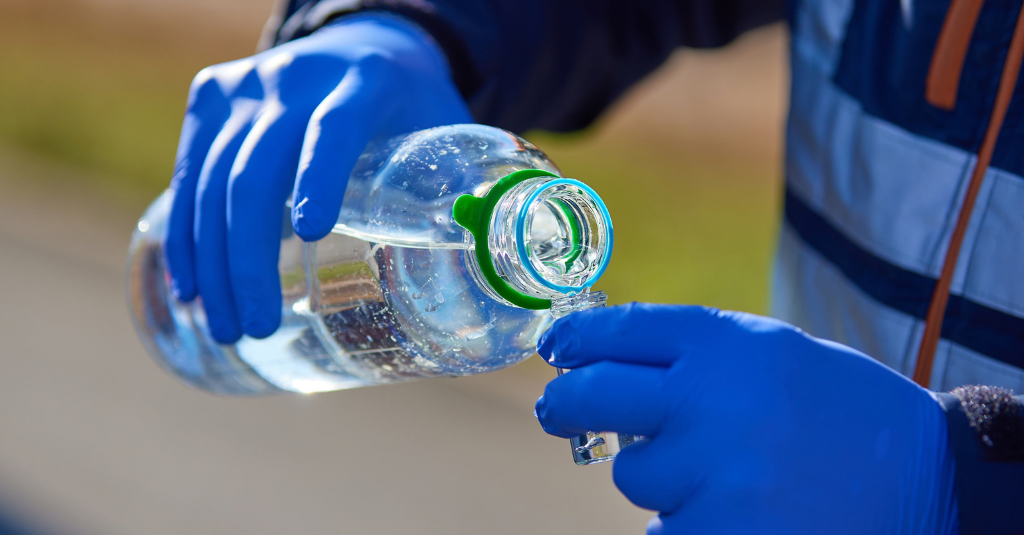

Per- and polyfluoroalkyl substances (PFAS) have become a defining issue in the global water supply. Often called “forever chemicals” because they persist in the environment and accumulate in the human body over time, PFAS have drawn increasing attention from the public, regulators and the scientific community. The scale of the problem is now coming into sharper focus: EWA’s analysis of EPA testing data indicates that 176 million Americans have drinking water that has tested positive for PFAS, and the regulatory response is intensifying at every level of government.
At Veolia, we develop and deliver end-to-end PFAS treatment solutions that remove these contaminants and enable their effective disposal.
Here are three of the most common questions we hear about PFAS — and what the latest developments mean for water systems, facilities and communities.
How are PFAS regulations progressing?
Regulations are advancing on multiple fronts, though their timelines and scope vary widely.
At the federal level in the U.S., the EPA proposed two rules on May 18, 2026, that would reshape the drinking water standards finalized in April 2024. The first would uphold the strict 4.0 parts per trillion maximum contaminant levels for PFOA and PFOS but offers public water systems an optional two-year compliance extension, moving the enforceable deadline from 2029 to 2031. The second proposes rescinding the regulatory limits for four other PFAS compounds originally covered by the rule, citing procedural issues under the Safe Drinking Water Act. Public comment on both proposed rules was scheduled to close July 20, 2026.
Beyond drinking water, PFAS liability exposure continues to grow. The EPA designated PFOA and PFOS as hazardous substances under CERCLA, creating potential cleanup liability for facility owners. And the agency has committed to updating its PFAS Destruction and Disposal Guidance annually rather than the previous three-year cycle, accelerating how quickly new science and treatment methods are formally recognized.
States aren’t waiting for federal action to settle. Nearly 100 new PFAS bills were introduced across 17 states in 2026 alone, with another 280 carried over from 2025. Six states enacted new consumer product bans effective January 2026, covering categories from cookware and cosmetics to textiles and artificial turf. Minnesota now requires manufacturers to report products containing intentionally added PFAS by July 2026.
Internationally, the European Union is pursuing what may become the most sweeping chemicals restriction in history, though no restriction has yet been adopted. In March 2026, the European Chemicals Agency’s Risk Assessment Committee adopted its opinion supporting an EU-wide PFAS restriction under REACH, covering more than 10,000 substances across 15 industrial sectors. The proposal still requires a Socio-Economic Analysis Committee opinion and further Commission, Council and Parliament action before it could take effect.
For companies that manufacture, import or sell PFAS-containing products in Europe, the window for compliance planning is narrowing. Even where federal timelines have loosened in the U.S., state and international regulatory pressure is intensifying. Facilities and manufacturers that plan proactively will be better positioned regardless of which specific deadlines hold.
What new technologies can destroy PFAS?
Historically, PFAS treatment has meant capturing and concentrating the chemicals through activated carbon, ion exchange or membrane filtration. Every treatment technology that removes PFAS from water produces a concentrated waste stream that still requires disposal, but that equation is changing.
Veolia has completed the waste management industry’s most comprehensive testing to date on PFAS incineration at its Port Arthur, Texas, facility. The first-of-their-kind tests evaluated thermal treatment of AFFF firefighting foam, PFAS-contaminated soil and spent carbon treatment media. Results showed destruction and removal efficiency greater than 99% for the majority of targeted PFAS compounds, including up to 99.9999% for PFOS and PFHxS. The testing followed EPA guidance and used advanced OTM-45 and OTM-50 methods to evaluate air emissions and products of incomplete combustion.
Building on that research, Veolia launched Drop®, a patented catalyst-based technology that accelerates PFAS degradation during thermal treatment. Drop mineralizes PFAS while reducing the corrosion and fouling problems that plague conventional incineration systems. Testing showed destruction efficiencies up to 99.9999% for both non-polymeric PFAS (including PFOA, PFOS and PFHxS) and polymeric PFAS. Veolia is deploying the technology across 20 hazardous waste incineration lines in France, Germany and the UK.
These disposal capabilities are most effective when paired with onsite treatment that captures and concentrates PFAS before disposal. Veolia’s unique LEAPfas™ activated carbon and ion exchange technology uses PFAS-selective carbon media or Ion exchange resins that reduce long-term costs compared to conventional vessel designs. PROflex™ reverse osmosis systems using high rejection membranes to address the widest range of PFAS compounds and co-contaminants. And ACTIFLO® CARB combines high-rate clarification with powdered activated carbon for PFAS and suspended solids removal in a single unit operation.
The BeyondPFAS program ties these capabilities together into a single end-to-end framework — from initial sampling and site assessment through treatment system design and operation to compliant destruction and disposal of concentrated waste.
Should I be concerned about PFAS in my drinking water?
The EPA’s Fifth Unregulated Contaminant Monitoring Rule (UCMR 5) has tested approximately 95% of U.S. community water systems for 29 PFAS compounds — the most comprehensive assessment of PFAS contamination in drinking water ever conducted. That visibility is the critical first step because you can’t treat what you can’t measure.
Where contamination has been identified, proven treatment solutions exist and are being deployed at scale. Veolia has implemented PFAS removal at more than 30 municipal water sites across the U.S., with an additional 50-plus industrial PFAS projects currently in progress.
Not everyone in the world has access to safe drinking water, but in communities where we can test and identify PFAS, we can treat it. Every water system tells a story, and we have the tools and the science to change that story and increase environmental security.
If you’re evaluating your PFAS exposure or developing a treatment strategy, our BeyondPFAS program provides end-to-end solutions from detection to destruction. These solutions are central to Veolia’s GreenUp strategic plan, accelerating the ecological transformation of cities and industries while safeguarding resources for the future. Wherever you are in the world, contact our experts to develop a customized PFAS management plan.
For more information on our PFAS solutions and to read our full technical disclaimer, visit https://www.veoliawatertechnologies.com/en/pfas
Tags

Author | John Peichel
Global PFAS Growth Initiative Leader, Veolia Water Tech